

by Alvin So and Jen Oldham
We have been thinking a lot about long-term athlete development in fencing. Everyone talks about private lessons, coaching styles, and finding the "best" coach, but very little gets into why certain coaching relationships seem to produce elite athletes over decades. This is designed as a parent and athlete support article.
We want to focus on more than what happens beyond an individual lesson instead of what happens over thousands of lessons.
Learning a Movement Isn't Just Copying It
So what actually happens during a one-on-one lesson from a cognitive perspective?
At the simplest level, we're talking about motor learning—the process by which the nervous system acquires and refines movement.
Every repetition isn't just strengthening muscles; it's strengthening neural pathways. The brain is learning when to activate muscles, how much force to apply, how to recognize patterns, and eventually how to make decisions without consciously thinking through every step.
Researchers often separate this into several stages:
Private lessons are unique because the coach can constantly adjust the challenge. Instead of repeating identical actions, the coach changes timing, distance, tempo, intention, and tactical context while preserving the underlying technical model.
From an ecological perspective of coaches the problem changes and the coach is helping the athlete to find ways to solve the problem, while building up their confidence and fine motor skills.
1) Fitts PM, Posner MI. Human Performance. Brooks/Cole; 1967.
2) Weaver J. Motor learning unfolds over different timescales in distinct neural systems. PLoS Biol. 2015;13(12):e1002313. doi:10.1371/journal.pbio.1002313
Vary the Problems, Not the Technique
Coach Jen Reflects: I believe good coaches don't endlessly reinvent technique but they vary the situations the athlete solves while the technique and competitive level grows. Tactical situational development and understanding increases in complexity as the athlete matures through a competitive environment. I believe at this stage of development the relationship seems different than in other sports. As the coach increases their competitive levels, the context and what the athlete needs changes. My coach Ed Korfanty always said, “The athlete and coach grow together.” What are your thoughts on this?
Alvin:
Exactly. I also think trust plays a big role here. Technique caps out, it could be skill-limiting or athlete-limiting, but decision-making doesn't. When coaches gradually hand decision-making over to the athlete, it builds trust, and the relationship turns into two people working the problem together instead of the coach just telling you what to do. And there's a way to hand that decision-making over responsibly…
Motor learning research supports something called contextual interference. If athletes solve slightly different problems while maintaining the same underlying movement, learning becomes more adaptable and transfers better into competition.
But there's an important distinction.
Changing the problem is beneficial.
Changing the technical solution every few training sessions usually isn't.
That's where confusion begins.
When Multiple Coaches Help - and When They Don't
Concerned Parent: I signed up my kids for a lot of different camps and we started taking 1:1 lessons with another coach but now things are falling apart. What happened? Isn’t more, better?
Alvin and Coach Jen: We don't think it's that simple.
David Tyshler (1927–2014), a renowned Soviet and Russian fencing coach, professor at the Russian State University of Physical Education, and author of more than 170 scientific publications and over 40 books, emphasized the importance of long-term athlete development. His coaching philosophy, together with broader research on coach–athlete relationships, suggests that the strongest coach–fencer partnerships are built over years rather than weeks, allowing a primary coach to develop a deep understanding of an athlete's technical habits, strengths, weaknesses, emotional tendencies, and preferred learning style.
That doesn't mean outside coaches aren't valuable.
It means they should add layers rather than replace the foundation.
Think of it like building a house.
The primary coach pours the concrete foundation.
Specialists can add new rooms, reinforce the structure, or decorate the interior.
But if every contractor starts rebuilding the foundation, eventually nothing lines up.
Why Different Coaching Philosophies Can Create Interference
A fencer struggling when they go to college or change coaches: So what actually happens when coaching messages conflict? Why is my fencing going downhill? Shouldn’t it be improving?
Motor learning researchers would describe it as interference.
The nervous system thrives on consistent error correction. When one coach says "extend earlier" and another says "wait longer," the athlete has to constantly decide which model is correct.
That decision itself consumes attention.
Instead of refining movement, they're evaluating competing instructions.
For experienced athletes, this isn't always a problem.
For developing athletes, it can significantly slow automatic skill acquisition.
As we talk to other coaches, elite coach hearsay is that it can take up to two years of training to reset to a new coach!
Confidence Changes Everything
Alvin: I think there's another layer that is really important! Some fencers can seem to absorb advice from everyone without losing themselves. Others become hesitant after hearing conflicting opinions.
Coach Jen: You mean self-efficacy! Trust in one's own decision-making.
Summary: A confident athlete often treats additional coaching as information. A less confident athlete may interpret every new opinion as evidence that they're doing everything wrong. Ironically, the exact same coaching advice can help one athlete while creating paralysis in another.
The difference isn't necessarily the advice.
It's the athlete's confidence in filtering it.
That suggests coaches shouldn't just develop technique.
Coach Jen: A core component in Forge’s coaching philosophy is creating independent decision-makers. I as a coach am not the one actually making the decisions on the strip! I ultimately want to become a consultant for an elite athlete, not coach a fencer who needs an order from me to make a decision.
Trust Is More Than a Feeling
Alvin: One area that's really fascinating is the newer neuroscience around coach-athlete relationships.
There's emerging research measuring neural synchrony - essentially how two people's brain activity becomes coordinated during interaction.
For years coaches talked about "being on the same wavelength."
Now researchers are beginning to observe something remarkably similar.
As trust develops over months and years, coaches and athletes become increasingly sensitive to each other's verbal and non-verbal cues. Eye contact, posture, timing, subtle changes in breathing, even anticipation of each other's actions become more synchronized.
The coach often knows an athlete is frustrated before they say anything.
The athlete understands feedback before a sentence is finished.
This aligns closely with decades of coaching wisdom.
Trust isn't just emotional.
It becomes functional.
Communication becomes faster, more efficient, and requires fewer words.
1) Crivelli D, Balconi M. Exploring interpersonal neural synchrony in coach-athlete interactions: insights from naturalistic EEG hyperscanning in competitive tennis. Front Sports Act Living. 2026;8:1751291. doi:10.3389/fspor.2026.1751291
Psychological Safety Creates Better Learning
We think this also connects with psychological safety which is a key component to being a competitive athlete in a 1:1 combat sport.
If athletes are afraid every mistake reflects badly on them, they'll avoid experimentation.
If they trust their coach, mistakes become information instead of failure.
Research across education, medicine, and sport consistently shows that environments built on trust, communication, and psychological safety encourage exploration, better feedback, and ultimately stronger long-term learning.
Elite performers don't stop making mistakes which is why tending to our environments and working to make an environment “less toxic” is so important.
Development Starts Long Before Elite Training
Thoughtful Parent: How will it be known when it is time to switch coaches or clubs?
The question isn't only whether athletes should switch coaches or clubs.
It is about when they should specialize.
Some of the strongest evidence comes from countries like Norway, where many elite athletes spend their childhood participating in multiple sports before specializing later. In several Norwegian youth sports, development models actively discourage early specialization and prioritize broad athletic experiences, enjoyment, and general movement skills.
That approach develops coordination, creativity, resilience, and a wider movement vocabulary before sport-specific refinement begins.
By the time athletes commit fully to one sport, they often arrive with a richer athletic foundation rather than years of narrowly practiced movement.
For fencing, that suggests technical excellence should be built upon broad physical literacy - not rushed specialization.
A Long-Term View of Excellence
What is the take-away-here?
Elite fencing isn't built by collecting as many coaching opinions as possible.
It's built through years of consistent, intentional development. A primary coach provides continuity.
Other coaches contribute perspective and specialized expertise without dismantling the underlying system.
Technical learning depends on consistent motor patterns.
Decision-making grows through varied tactical problems by competing and returning to training and developing a consultative relationship with a primary lesson coach.
Confidence and self-efficacy determines how athletes process new information.
Trust strengthens communication until a relationship is formed and communication happens on levels few notice.
And long before any elite development, broad athletic development gives future fencers the physical and cognitive tools they'll eventually refine into elite performance.
Perhaps the greatest misconception in modern sport is that progress comes from constantly searching for something new.
More often, lasting excellence comes from investing deeply in relationships, refining fundamentals over years rather than weeks, and allowing great coaching to evolve alongside the athlete who receives it.
Suggested Research Areas for Readers Who Want to Explore Further
This conversation draws on several well-established areas of sport science and learning research that are worth exploring in greater depth:
While these fields use different terminology, they converge on a remarkably consistent conclusion: elite performance is not the product of isolated lessons or isolated coaches. It emerges through the interaction of skilled instruction, meaningful relationships, deliberate practice, psychological safety, and years of consistent development.
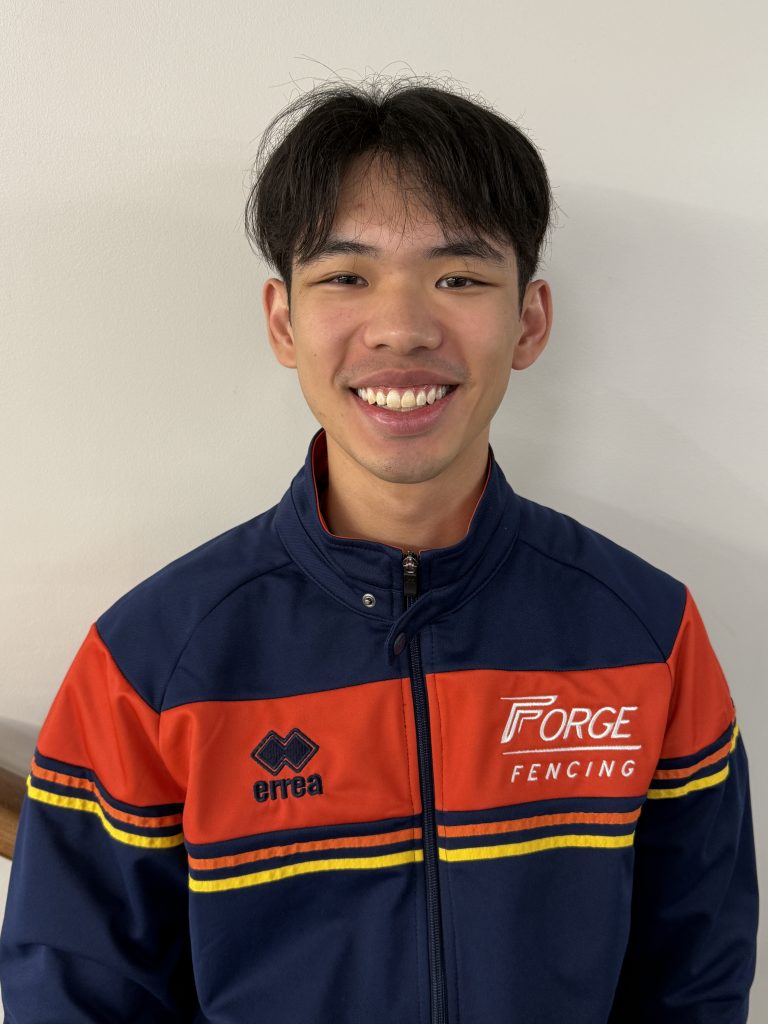
Alvin So is a Doctor of Physical Therapy student at Duke University and a former competitive sabre fencer for the Hong Kong National Team, having competed in multiple international tournaments. As a coach and Certified Strength and Conditioning Specialist (CSCS), he combines his psychology degree from UCLA with performance psychology principles to develop athletes both physically and mentally. Alvin aims to work at the intersection of fencing performance and rehabilitation to better serve the fencing community.
Alvin So is a Doctor of Physical Therapy student at Duke University and a former competitive sabre fencer for the Hong Kong National Team, having competed in multiple international tournaments.
As a coach and Certified Strength and Conditioning Specialist (CSCS), he combines his psychology degree from UCLA with performance psychology principles to develop athletes both physically and mentally. Alvin aims to work at the intersection of fencing performance and rehabilitation to better serve the fencing community.
Jennifer K. Oldham, M.S., is a nationally recognized fencing coach and leader with experience in high-performance athlete development, club management and in both private club and NCAA coaching. Coach Jen combines her background in counseling psychology with extensive technical expertise to foster resilient, independent athletes.
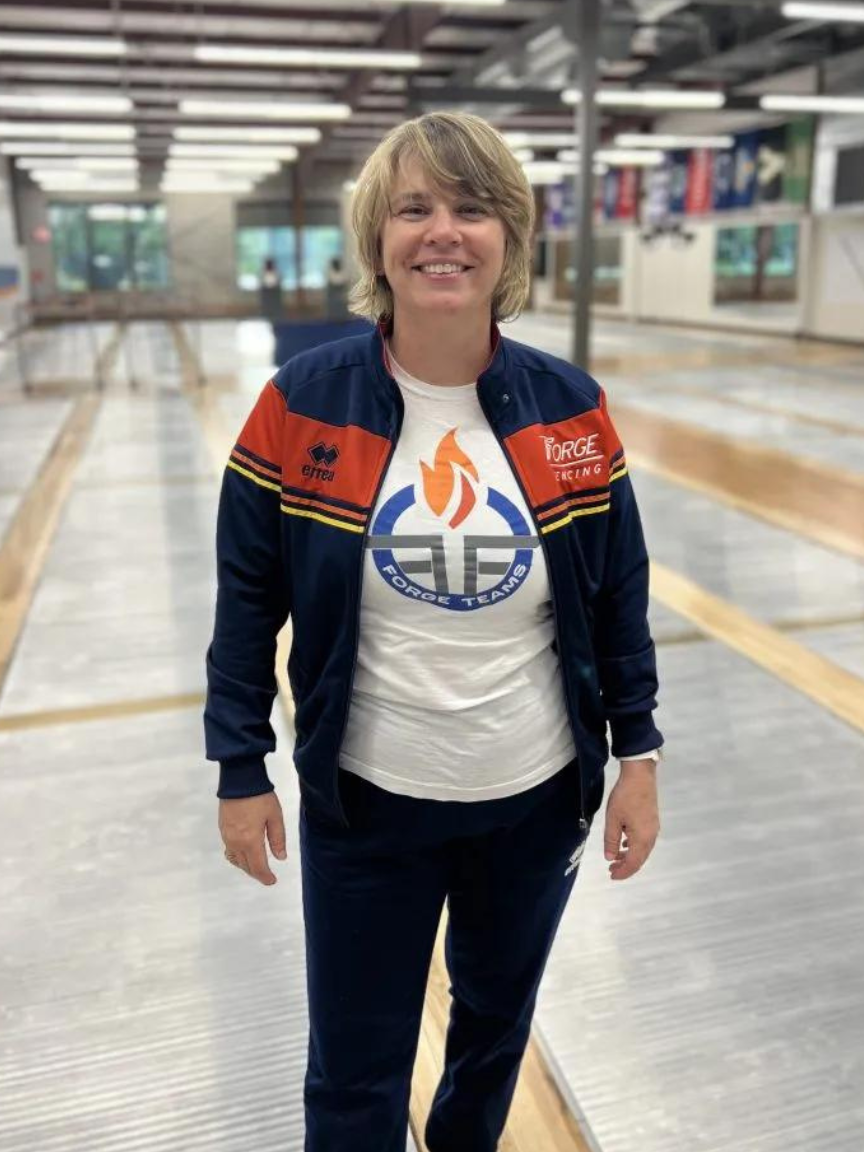
Her career includes serving as a designated coach for Team USA, chairing the US Fencing Coaches Association Certification and Accreditation Board, and co-founding WFencing to advance professional development for women in the sport. Jennifer has guided over 100 national medalists and 7 international medalists, consistently advocating for long-term coaching and athlete development programs within Team USA. She is the owner of Forge Fencing Academy and Club and consultant with Forge Sport Consulting.
Jennifer K. Oldham, M.S., is a nationally recognized fencing coach and leader with experience in high-performance athlete development, club management and in both private club and NCAA coaching. Coach Jen combines her background in counseling psychology with extensive technical expertise to foster resilient, independent athletes.
Her career includes serving as a designated coach for Team USA, chairing the US Fencing Coaches Association Certification and Accreditation Board, and co-founding WFencing to advance professional development for women in the sport. Jennifer has guided over 100 national medalists and 7 international medalists, consistently advocating for long-term coaching and athlete development programs within Team USA. She is the owner of Forge Fencing Academy and Club and consultant with Forge Sport Consulting.